

Moving to Margate City NJ: Essential Tips for New Residents in 2026
Moving to Margate City NJ in 2026 means joining a compact shore community where summer energy meets off-season calm. According to U.S. Census Bureau QuickFacts, Margate City had a population of about 5,317 residents as of the most recent reporting period, creating a small-town scale compared with nearby Atlantic City. New arrivals quickly notice how Ventnor Avenue, Atlantic Avenue, and Amherst Avenue form the city’s backbone, while iconic Lucy the Elephant, Huntington Avenue beach, and the bayfront marinas define the local identity year-round.
What Lifestyle Changes Come With Moving to Margate City NJ?
Daily life after moving to Margate City NJ centers on the barrier island rhythm. Activity clusters along Ventnor Avenue, where Casel's Supermarket, Maynard's Cafe, and Sofia Restaurant anchor everyday errands and evening plans. According to Walk Score, Margate City holds a walk score in the mid-60s, meaning many errands can be completed on foot, particularly near Washington Avenue and Jerome Avenue. Residents often trade long suburban drives for short, repeatable routines between the ocean, the bay, and these commercial corridors.
Beach culture shapes schedules in ways many newcomers do not expect. Summer days start early as locals secure spots near Huntington Avenue beach or the Jerome Avenue beach entrance before crowds build. According to the City’s beach badge information page on the City of Margate website, seasonal badges are required for those aged 12 and older during peak months, and badge lines can stretch for several blocks during holiday weekends. Planning errands around badge pickups, lifeguard hours, and evening strolls on Atlantic Avenue quickly becomes second nature.
Off-season, the mood shifts. Many second homes empty out after Labor Day, leaving wider parking availability near Amherst Avenue marinas and quieter mornings along the Margate City Boardwalk extension that connects toward Ventnor City. According to tourism data summarized by Atlantic County, regional visitation drops sharply after September, which in turn shortens restaurant wait times at spots like Tomatoes and Ventura's Greenhouse to under 15 minutes most weeknights. New residents often value this nine- to ten-month period of calmer streets and easier reservations.
How Do Housing Options and Costs in Margate City NJ Compare in 2026?
Housing choices after moving to Margate City NJ range from compact condos near Ventnor Avenue to expansive bayfront homes along Bayshore Drive and North Douglas Avenue. According to market summaries on Redfin, closed sales in recent periods show many smaller condos trading roughly between $350,000 and $550,000, depending on proximity to the beach and parking. Two- and three-story single-family homes closer to the ocean along Atlantic Avenue and Iroquois Avenue often command substantially higher prices.
Bayfront and beach-block properties sit in their own tier. Redfin’s Margate City data indicates that larger waterfront homes and newly built luxury properties commonly close in a broad range from around $900,000 to above $2.4M, based on lot size, age, and water access. Streets such as Amherst Avenue, Bayshore Drive, and Rumson Avenue draw attention from buyers seeking docks, sunset views, and quick runs by boat to Great Egg Harbor Bay. Inventory typically remains constrained, with only a few dozen listings active during peak summer months.
On a calm summer evening along Amherst Avenue, the bayfront tells its own story. The faint scent of salt water drifts over from the marinas while dock lines creak gently against pilings. Light from Tomatoes and Steve & Cookie's By the Bay casts warm reflections across the ripples, and the clink of plates carries from outdoor decks. Passing golf carts hum softly along the street, their headlights gliding over manicured front gardens and restored shingle-sided homes that frame the quiet water.
Condo living near central Margate City appeals to residents prioritizing simplicity. Buildings around Washington Avenue and Monmouth Avenue often supply off-street parking, shared outdoor showers, and compact balconies overlooking side streets. According to the homeowners association fee data summarized on Zillow, monthly HOA dues frequently fall somewhere between $250 and $600, often covering exterior maintenance and amenities. For year-round residents, these fees trade DIY responsibilities for predictable monthly costs and professionally managed common areas.
What Are Commute, Transit, and Parking Like in Margate City NJ?
Commuting logistics play a major role for anyone moving to Margate City NJ while working in regional employment centers. According to Google Maps travel estimates, the drive from central Margate City near Ventnor Avenue and Washington Avenue to downtown Atlantic City typically takes about 15 minutes via Atlantic Avenue or Ventnor Avenue in normal traffic. Reaching the Atlantic City Expressway entrance near the marina district generally adds another 5 minutes, creating a straightforward link toward Philadelphia and Camden County.
Public transit options focus on bus service. According to schedule information from NJ Transit, the 505 bus running along Ventnor Avenue connects Margate City with Atlantic City to the northeast and Somers Point to the southwest, with many daytime trips scheduled roughly every 30 to 60 minutes in-season. Stops near Jefferson Avenue and Jerome Avenue place most of the city within a short walk of a stop, particularly for residents in mid-island streets like Fredericksburg Avenue and Clarendon Avenue.
Parking management requires some learning, especially close to the ocean. The City’s parking guidance on the official Margate Police Department site outlines seasonal regulations, including time-limited spots and resident permits for certain blocks near beach access points. During July and August weekends, informal estimates from Atlantic County tourism sources suggest prime spots near Huntington Avenue beach and Granville Avenue beach can fill before 10:00 a.m. Clear signage along Atlantic Avenue and Monmouth Avenue helps drivers avoid fines in heavily enforced zones.
For residents commuting off the island daily, the Downbeach Express bridge offers a predictable toll route toward Northfield and Egg Harbor Township. According to toll information provided by Downbeach Express, discounted transponder programs can reduce per-crossing costs from around $2.00 cash to lower electronic rates when used frequently each month. Many year-round residents structure errands so that grocery trips to larger stores along Tilton Road in Northfield occur on days when commutes already cross the bridge, minimizing extra toll expenses.
How Do Schools, Parks, and Services Shape Daily Life in Margate City NJ?
Families moving to Margate City NJ often focus on the local school system and recreation offerings. William H. Ross III Elementary School on Ventnor Avenue and Eugene A. Tighe Middle School on Monmouth Avenue serve most in-town students before they transition to regional high schools. According to GreatSchools, Ross Elementary holds a rating in the range of 7 to 9 out of 10 in recent years, with particularly strong marks in student progress and test scores compared with statewide averages.
Recreation revolves around both the beach and city-maintained facilities. The Sigmund Rimm Recreational Complex off Jerome Avenue offers ballfields, basketball courts, and playground equipment that stays busy from spring through fall. According to details on the Margate Recreation Department site, organized programs span youth sports, summer camps, and fitness activities for adults, with seasonal registration fees typically ranging from about $40 to $150 per program. Playgrounds at Decatur Avenue and Washington Avenue supplement the complex, giving children multiple options within a few blocks of most homes.
On a breezy afternoon at Sigmund Rimm Recreational Complex, the crack of aluminum bats echoes across the infield while the smell of freshly cut grass hangs in the air. Children race between the slides and swings as gulls circle overhead, their calls mixing with the muffled thud of basketballs on the nearby courts. From the bleachers along Jerome Avenue, the sun glints off parked cars and the distant rooftops stretching toward Atlantic Avenue, creating a bright, expansive sense of space.
Day-to-day services operate on a convenient, small-city scale. The Margate City Public Library on Atlantic Avenue provides free Wi-Fi, community meeting rooms, and year-round programming. According to program calendars posted on the Margate City Public Library website, events such as story times, lecture series, and technology workshops occur several times per week, with attendance caps typically between 15 and 40 participants. Nearby, Margate City Hall and the Margate Municipal Building handle permits, utility coordination, and voter services within a few minutes’ walk for most central residents.
What Seasonal Factors Should New Residents Expect in Margate City NJ?
Seasonality defines many aspects of moving to Margate City NJ. Summers bring an influx of second-home owners and weekly renters that can triple the daytime population along Ventnor Avenue and Atlantic Avenue. According to regional tourism trends summarized by VisitNJ, Atlantic County’s shore towns see visitor counts spike from Memorial Day through Labor Day, with weekend hotel occupancy often hovering around 80% or higher. Margate mirrors this pattern, leading to longer wait times at Tomatoes, Sofia Restaurant, and Ventura's Greenhouse, particularly after sunset.
Hurricane season and coastal weather also influence planning. The New Jersey coastal hazards overview from NJ Department of Environmental Protection notes that the Atlantic hurricane season runs from June 1 through November 30, with the highest storm frequency typically between August and October. Margate City’s low-lying streets, including sections of Amherst Avenue and Bayshore Drive, can experience tidal flooding during strong nor’easters or king tides. Residents often monitor forecasts closely and store outdoor furniture early when a major storm approaches.
Off-season, many businesses on Ventnor Avenue and Atlantic Avenue shift hours or temporarily close. According to typical winter schedules observed by VisitNJ and local business listings, some restaurants reduce operations to weekends only between January and March, while others pause entirely for 8 to 10 weeks. Grocery stores like Casel's Supermarket and service staples such as pharmacies remain open, ensuring that year-round residents retain convenient access to essentials even when tourist traffic fades.
Energy usage and utility costs move with the temperature swings. Data from U.S. Energy Information Administration shows average New Jersey residential electricity consumption around 683 kilowatt-hours per month in recent years, with coastal homes often exceeding that during air-conditioning-heavy months. Many Margate City residents install programmable thermostats or upgrade insulation in older homes along streets such as Monmouth Avenue and Clarendon Avenue to moderate bills during both humid summers and windy winter cold snaps coming off the Atlantic Ocean.
The 5,317 population figure cited at the start of this guide reflects a community small enough for daily familiarity yet large enough to support services beyond a typical beach town. That number from the U.S. Census underscores how quickly market shifts become visible in Margate City’s compact housing and rental inventory. The South Jersey Shore Regional MLS remains the primary data backbone for listing activity, price movements, and closed-sale comparisons across Longport, Ventnor City, and Margate City. Buyers who register listing alerts through that system and submit showing requests within 48 hours of promising new entries before the late-spring surge in May generally secure stronger negotiating positions, while those delaying until peak July demand often face leaner choices and steeper competition.
FROM OUR BLOG
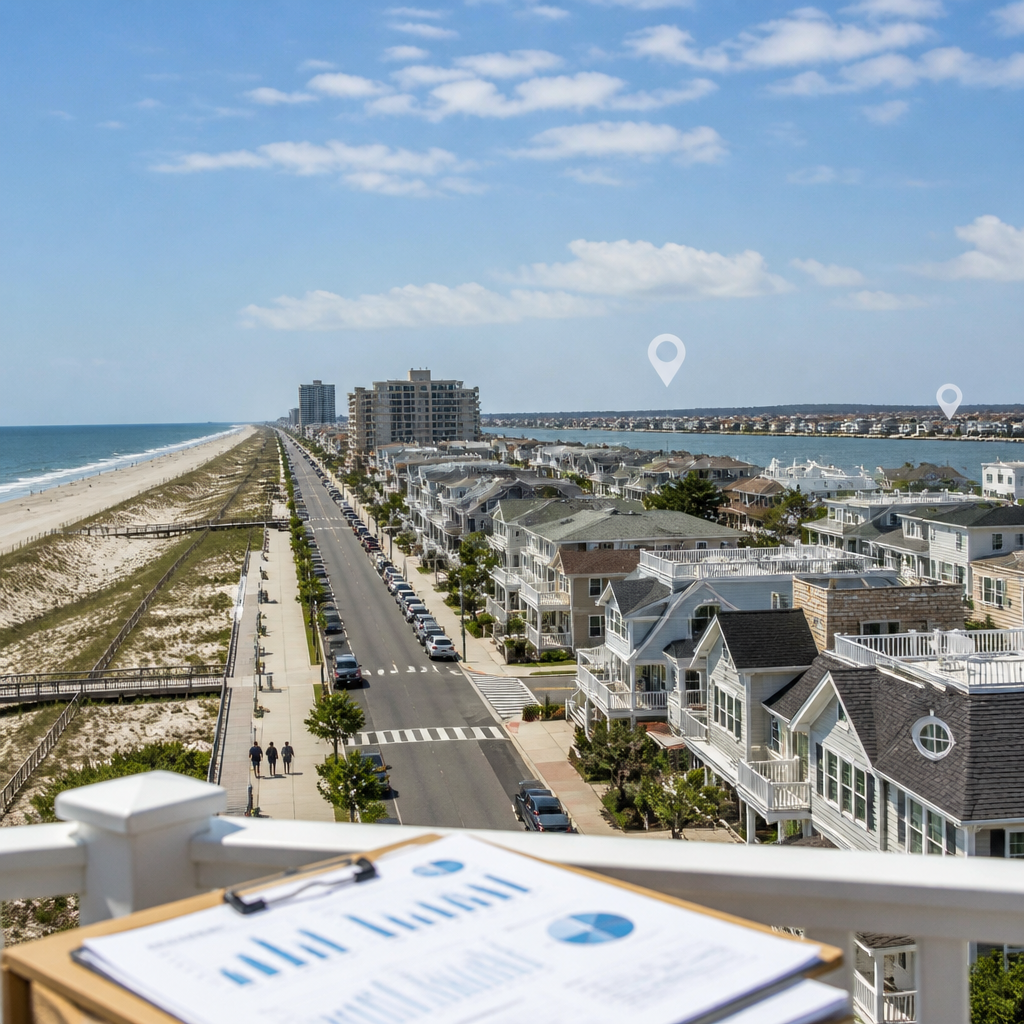

Investing in Ocean City NJ: A Comprehensive Guide to 2026 Opportunities
Investing in Ocean City NJ: A Comprehensive Guide to 2026 Opportunities Ocean City, NJ has evolved into one of the strongest shore markets on the South Jersey coast, with limited land and steady demand for weekly rentals. According to Redfin, typical home sale prices in Ocean City ranged between $85
Ventnor City NJ Residential Homes for Sale: 2026 Market Insights
Ventnor City NJ Residential Homes for Sale: 2026 Market Insights Ventnor City sits between Atlantic City and Margate City, offering oceanfront access with a quieter residential feel and a typical 30-year planning horizon for many mortgage strategies. Shore buyers in 2026 are watching inventory, pric